
Poetic Justice Institute Book Prizes
“I am deliberate and afraid of nothing.” ― Audre Lorde
We seek poetry that opens our shared languages, challenges complacency, and seeks the means of transformation in thought and form.
2026-2027 PJI Prize and Editor's Prize
Alicia Ostriker will judge the PJI Prize, and Elisabeth Frost will select the Editor's Prize for a BIPOC writer.
Submissions open September 1, 2026 and close on November 15, 2026.
Find full prize guidelines and submit using the link below.

Winners Receive
Publication with Fordham University Press
$1,000 Cash Prize
One-on-One Publicity Consultation
Virtual Launch through Poetic Justice Event Series
2025-2026 PJI Prize Winners
We are excited to announce that the winner of our 2025-2026 PJI Prize is Kaitlyn Airy and the winner of our 2025-2026 PJI Editor’s Prize is Shlagha Borah. Read below to learn more about them.
Kaitlyn Airy
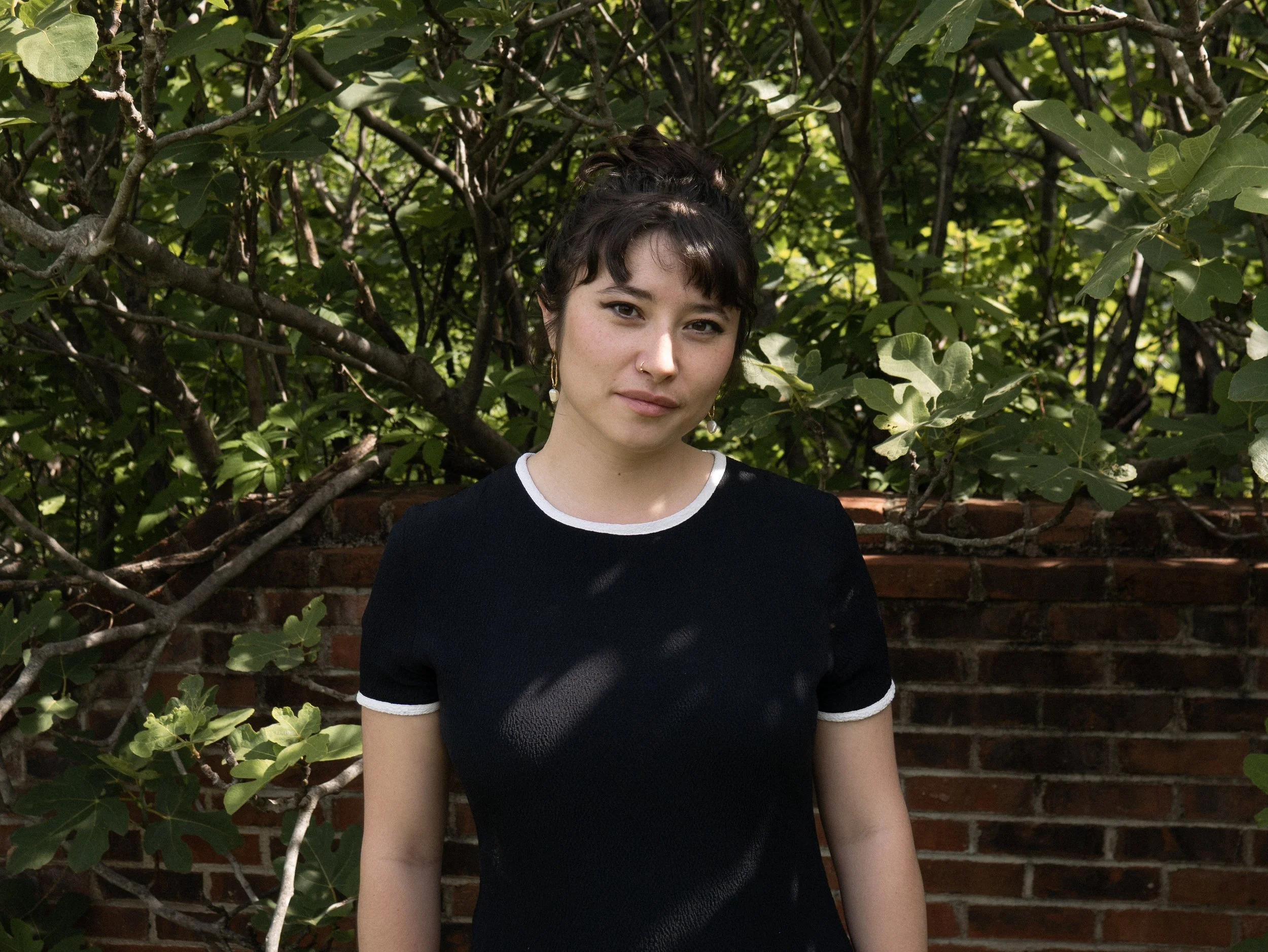
Poetry Collection Title: Braid The Dark Hair She Gave You
Kaitlyn Airy is a Korean American poet and essayist. Her work explores international adoption, American labor history, ecological precarity, the Korean War and the rupture that continues in its wake. Raised on a small island in the Salish Sea, she currently lives in Charlottesville where she serves as a Research Associate and Lecturer at the University of Virginia. Her work is found in FENCE, Poets.org, Poetry Online, The Kenyon Review, and elsewhere. In her spare time she enjoys consulting the oracle, tracking down patches of ghostpipes, and experimenting with fermentation.
PJI Prize Finalists
In no ranked order:
“Whatever You Expected” by Susie Meserve
Immortality Among Fruit Trees by Candice Reffe
Platypus Dream by Richard Prins
Black Shoal by Christopher Nelson
Slick by Destiny Crockett
The Decadent Movement by Laura Kolbe
Hysteria by Christine Robbins
Somewhere Horses by Jasmine Khaliq
Hollow Tree by Sarah Kortemeier
Free Time by Cameron Cocking
We are deeply grateful to our initial readers:
Tianyi Duanmu
Sara Hovda
Dong Li
Bo Hee Moon
Robin Walter
Shlagha Borah
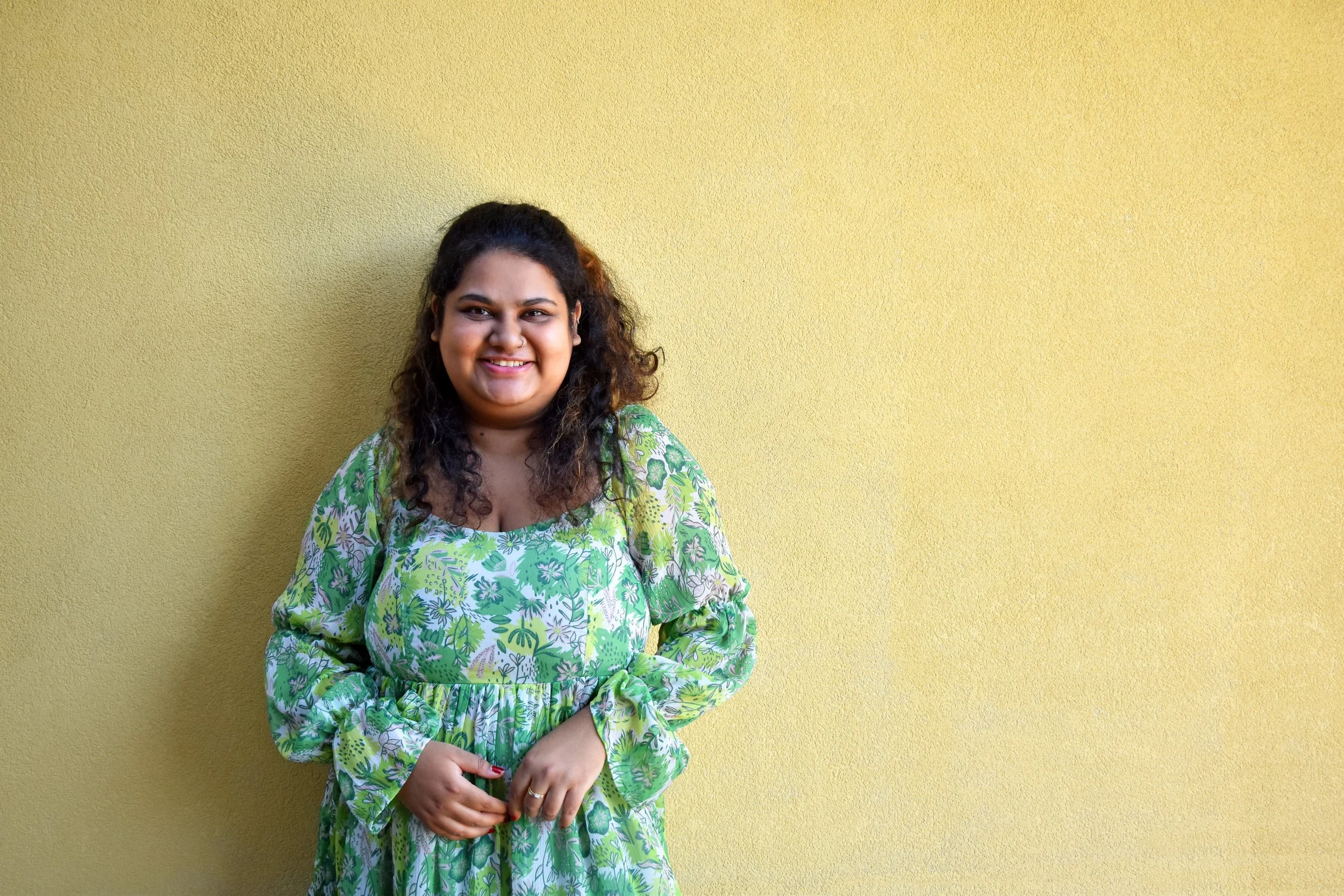
Poetry Collection Title: daughterline
Shlagha Borah is from Assam, India. She is a 2026-2027 Jay C. and Ruth Halls Poetry Fellow at the Wisconsin Institute of Creative Writing. Her work appears or is forthcoming in POETRY, AGNI, Shenandoah, Epoch, and elsewhere. She is the Valentines Editor at Honey Literary and Deputy Editor at The Offing. She’s a 2024 Ruth Lilly and Dorothy Sargent Rosenberg Poetry Fellowship finalist. Her work has been supported by Tin House, Brooklyn Poets, The Hambidge Center, The Peter Bullough Foundation, and VCCA, among others. Her work is available at www.shlaghaborah.com. Instagram: @shlaghab
PJI Editor’s Prize Finalists
In no ranked order:
! [or the superblack exhibit]: poems by KÁNYIN Olorunnisola
Carne, 1970 by Krystal Vazquez
Colossus by O-Jeremiah Agbaakin
diasporous by Grace Zhou
In the Name of Yellow Leaves That Is My Country by Hera Naguib
Man Sold Separately by Monic Ductan
Moonful by Winshen Liu
Our Long Singing Necks by Kuhu Joshi
When You Want Talons by Jia-Rui Cook
Perish / Abolish by Mia Kang
Selected by Elisabeth Frost, with José Alvergue and JoAnne McFarland

Author Kudos
Our winners have received many accolades, including the Whiting Award, fellowships from the National Endowment for the Arts, the Kate Tufts Discovery Award, the Rome Prize from the American Academy of Arts and Letters, the PEN USA Literary Award in Poetry, the Maine Prize for Poetry, and many others.
Recently, Julia Bouwsma, winner of the 2016-17 Poets Out Loud Prize, was named a 2024 Poet Laureate Fellows by the Academy of American Poets which comes with a $50,000 prize. Also, this past year's winner of the PJI Prize, Marcella Durand, has a new essay collection which she co-edited with Jennifer Firestone recently published by MIT Press called Other Influences. Finally, Julie Choffel, winner of the 2011-2012 Poets Out Loud Prize, has just published a new book in 2024 with University of Nebraska Press entitled Dear Wallace.
The Poetic Justice Institute Prizes (formerly Poets Out Loud Prizes) award honoraria and publication each year to two full-length poetry manuscripts through an open international competition. A poet of national renown selects the winner of the PJI Prize; the PJI Editor’s Prize for a BIPOC writer is chosen by the series editor.
Our judges have included some of the most celebrated poets in the U.S. and abroad: Yusuf Komunyakaa, Marie Ponsot, Alice Fulton, Eileán Ní Chuilleanáin, Claudia Rankine, Mei-mei Berssenbrugge, Alberto Ríos, Kimiko Hahn, and Patricia Spears Jones, among others. The PJI Prizes are open to poets at any stage of their careers, with or without previous book publication. We welcome a diversity of approaches to poetry and poetics, with particular interest in innovative forms, documentary methods, and visual poetics. With Fordham University Press, we are committed to creating beautifully designed and edited books with high production values and national distribution.
From the moment I learned that my collection MIDDEN had been selected as the winner of the 2016-17 Poets Out Loud Prize, I knew my book could not have been in better hands. The Series Editor, Elisabeth Frost, approached my manuscript with a balance of thoughtful empathy and visionary determination—pushing and uplifting the poems in equal and gentle turns while providing space for me to experiment and for the work to grow. There were a few tricky questions that arose during the editing process, and I always knew that I could rely on her wisdom and consideration, and that we would come to the best possible solution for the book together. When it came to the production process, Fordham University listened to my input and created a stunningly beautiful book—an object that organically and artistically represented the poems it contained, and which still jars me anew each time I have a chance to hold it in my hand. But the best part was perhaps the sense of community encouragement that POL offered. The memorable launch reading at Fordham, the wonderful Voices Up concert where I had a chance to see my poems set to choral music, and other opportunities, support, and collaboration all allowed me to feel as if my book and I had truly found a home and family. ~ Julia Bouwsma
Publishing Xamissa with Fordham University Press in the Poets Out Loud series changed my writing life. A consummate editor, Elisabeth Frost helped me to revise my work, frame its documentary approach with introductory pieces, and offer endnotes on its South African context. Production was flawless, from permission to use a William Kentridge artwork for the book cover through to the layout of a challenging text, which included 17th century corporate logos, multiple languages, and a non-Latin script. My work suited the large format that FUP could offer and the production quality--from cover to cover--far outstripped most independent presses. The publicity team secured reviews in journals such as Prairie Schooner, Gulf Coast, Kenyon Review, Poetry International, and Colorado Review. Elisabeth and the Poets Out Loud team also put together a well-attended book launch in New York, as well as an unforgettable collaboration with the C4 Collective, who set some of my poems to choral music. The advantage of Fordham University Press includes a wide range of library purchases both in the US and abroad, from Stanford to the New York Public Library, from the British Library to the University of Leiden. In addition, their university press distribution model has kept Xamissa in print way longer than what most presses can afford. For writers looking for a university job or on tenure-track, Fordham University Press also offers immediate name recognition for colleagues unfamiliar with poetry. I'm grateful: I couldn't have found a better home for my first book. –– Henk Rossouw